
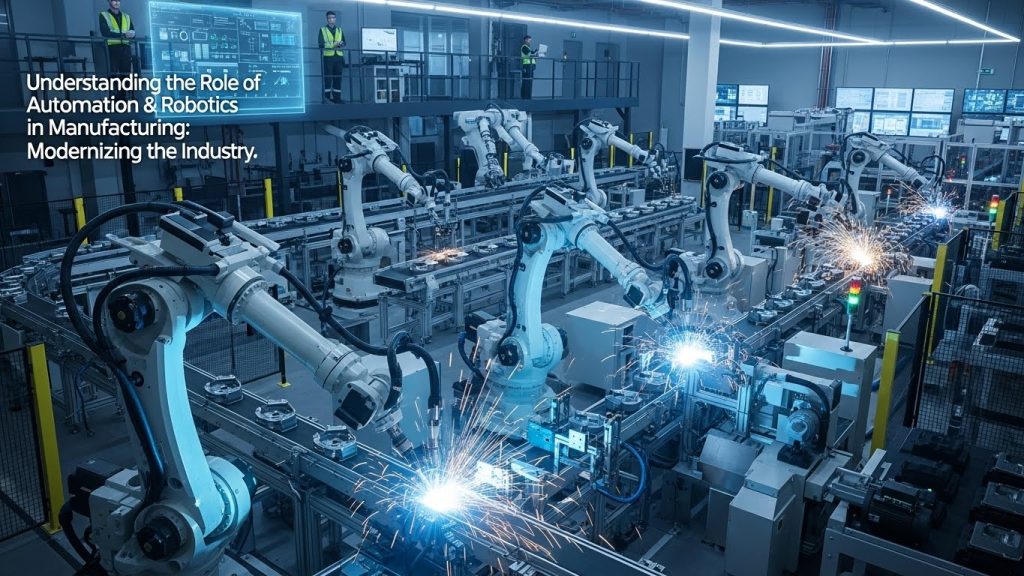
Understanding the Role of Automation & Robotics in Manufacturing: Modernizing the Industry
In recent years, the manufacturing industry has undergone a significant transformation, primarily driven by advancements in automation and robotics. These technologies have reshaped how products are designed, produced, and delivered, ushering in a new era of efficiency and productivity. This blog post delves into the intricate role of automation and robotics in modern manufacturing, highlighting their benefits, applications, and the future trajectory of the industry.
The Evolution of Automation in Manufacturing
Automation in manufacturing is not a novel concept. Its roots can be traced back to the industrial revolution, where mechanization first began to replace manual labor. Over the decades, automation technologies have evolved from simple mechanized systems to highly sophisticated machinery capable of performing complex tasks with precision and speed.
Today, automation encompasses a wide range of technologies, including computer-aided manufacturing (CAM), programmable logic controllers (PLCs), and advanced software solutions that facilitate seamless integration and operation of manufacturing processes. These technologies have allowed manufacturers to enhance production efficiency, reduce costs, and improve product quality.
Robotics: The Backbone of Modern Manufacturing
Robotics, a subset of automation, has become a cornerstone of modern manufacturing. Industrial robots are employed across various sectors to perform tasks that are repetitive, dangerous, or require high precision. These tasks range from assembly and welding to painting and packaging.

The adoption of robotics in manufacturing offers numerous advantages. Robots can work continuously without fatigue, maintain consistent quality, and adapt to various tasks through reprogramming. Furthermore, the integration of artificial intelligence (AI) and machine learning has empowered robots to make decisions, learn from data, and optimize processes autonomously.
Applications of Automation and Robotics in Manufacturing
The applications of automation and robotics are vast and varied, affecting nearly every aspect of manufacturing. Here are some key areas where these technologies have made a significant impact:
1. Assembly Lines
One of the most prominent applications of robotics is in assembly lines. Robots streamline the assembly process by performing repetitive tasks with high accuracy and speed, significantly reducing the time and cost involved in manual assembly. For instance, automotive manufacturers utilize robotic arms to assemble parts with precision and consistency.
2. Quality Control
Automation and robotics also play a crucial role in quality control. Vision systems equipped with cameras and sensors inspect products with accuracy far superior to the human eye. These systems detect defects, measure dimensions, and ensure that products meet quality standards, minimizing waste and enhancing customer satisfaction.
3. Material Handling
Material handling is another critical area where automation excels. Automated Guided Vehicles (AGVs) and robotic arms efficiently manage the movement of materials within a manufacturing facility, optimizing logistics and reducing the need for manual intervention. This ensures a smooth flow of materials and minimizes the risk of damage.
4. Welding and Fabrication
Robotic welding systems are widely used in industries requiring precision and consistency. These systems perform welding operations with greater accuracy and speed than manual methods, reducing errors and improving the overall strength and durability of welded joints.
5. Packaging and Palletizing
In the packaging sector, robots automate tasks such as sorting, packing, and palletizing products. This not only speeds up the process but also ensures that products are handled carefully, reducing the risk of damage during transit. Automated systems can adapt to different product sizes and shapes, providing versatility in packaging operations.
The Benefits of Automation and Robotics in Manufacturing
The integration of automation and robotics in manufacturing brings several benefits that significantly enhance operational efficiency and competitiveness:
- Increased Productivity: Automation enables manufacturers to produce more in less time, increasing throughput and meeting higher demand.
- Cost Reduction: By minimizing human labor, reducing waste, and optimizing resource usage, automation leads to substantial cost savings.
- Improved Quality: Consistent and precise operations lead to higher product quality and fewer defects.
- Enhanced Safety: Automation reduces the risk of workplace accidents by taking over dangerous tasks, ensuring a safer work environment.
- Flexibility: Modern robotic systems can be reprogrammed to handle different tasks, providing flexibility to adapt to changing production needs.
Challenges and Considerations
Despite its numerous benefits, the adoption of automation and robotics in manufacturing is not without challenges. Key considerations include:
1. High Initial Costs
The implementation of advanced robotic systems and automation technologies requires significant upfront investment. However, the long-term benefits often outweigh these initial costs, as improved efficiency and reduced operational expenses lead to a quick return on investment.
2. Workforce Impact
Automation can impact the workforce by displacing some manual jobs. However, it also creates new opportunities in robotics programming, maintenance, and system design. It is essential for companies to invest in employee retraining and skill development to ensure a seamless transition.
3. Integration Complexity
The integration of automation technologies with existing systems can be complex, requiring careful planning and execution. Manufacturers must consider compatibility, scalability, and interoperability to maximize the benefits of automation.
The Future of Automation and Robotics in Manufacturing
The future of manufacturing is undoubtedly intertwined with the continued evolution of automation and robotics. Emerging technologies such as the Fourth Industrial Revolution, the Internet of Things (IoT), and advanced data analytics are set to further revolutionize the industry.
As these technologies mature, we can expect even greater levels of automation, with fully autonomous manufacturing facilities becoming a reality. Collaborative robots, or cobots, will work alongside humans, enhancing productivity while maintaining flexibility.
Moreover, advancements in AI and machine learning will enable predictive maintenance, real-time monitoring, and adaptive manufacturing processes, allowing manufacturers to respond swiftly to market demands and optimize operations continuously.
Takeaways
Automation and robotics have undoubtedly transformed the manufacturing industry, driving unprecedented levels of efficiency, quality, and innovation. As these technologies continue to evolve, they will play an even more critical role in shaping the future of manufacturing.
For manufacturers, embracing automation and robotics is not merely an option but a necessity to remain competitive in an increasingly globalized market. By leveraging these technologies, manufacturers can position themselves for success, ensuring sustainable growth and prosperity in the years to come.
For more insights into the role of automation and robotics in manufacturing, explore resources from the Machine Design and stay updated on the latest trends and innovations shaping the industry.
Strategies for Successful Implementation
To fully harness the potential of automation and robotics in manufacturing, companies must adopt strategic approaches that facilitate successful implementation. Here are some key strategies to consider:
1. Comprehensive Planning
Implementing automation and robotics requires careful planning to align with business objectives. Manufacturers should conduct thorough assessments to identify areas where automation can provide the most significant impact. This includes evaluating current processes, understanding pain points, and setting clear goals for improvement.
2. Technology Selection
Choosing the right technology is crucial for successful implementation. Companies should consider factors such as scalability, compatibility with existing systems, and the ability to integrate with future advancements. Partnering with reliable technology providers and conducting pilot tests can help in making informed decisions.
3. Employee Engagement
Involving employees in the transition process is vital for minimizing resistance and ensuring a smooth implementation. Providing training and upskilling opportunities can empower the workforce to adapt to new technologies and take on more valuable roles in the organization.
4. Continuous Improvement
Automation and robotics should not be viewed as one-time investments but as part of an ongoing process of improvement. Manufacturers should regularly evaluate system performance, gather feedback, and make necessary adjustments to optimize operations continually.
Case Studies: Success Stories in Automation and Robotics
Numerous companies have successfully integrated automation and robotics into their manufacturing operations, reaping substantial benefits. Let’s explore a few notable case studies:
1. Tesla’s Gigafactory
Tesla’s Gigafactory is a prime example of automation in action. The facility uses advanced robotics to produce batteries and electric vehicles efficiently. Tesla’s commitment to automation has enabled it to scale production rapidly, reduce costs, and maintain high-quality standards.
2. Amazon’s Fulfillment Centers
Amazon has revolutionized e-commerce logistics with its automated fulfillment centers. Using a combination of robotic systems and advanced algorithms, Amazon can process and ship orders at lightning speed, ensuring customer satisfaction and maintaining its competitive edge.
3. BMW’s Smart Factory
BMW’s smart factory in Germany showcases the integration of IoT and robotics. The facility employs intelligent systems to optimize production processes, enhance flexibility, and reduce downtime. This approach has allowed BMW to produce customized vehicles efficiently, meeting diverse customer preferences.
Conclusion: Embracing the Future
The journey toward full automation and robotics integration in manufacturing is an ongoing one, filled with opportunities and challenges. As technologies advance, manufacturers must remain agile and embrace change to stay ahead in the competitive landscape.
By adopting strategic approaches, investing in employee development, and leveraging cutting-edge technologies, companies can unlock the full potential of automation and robotics, driving innovation, efficiency, and growth.
Ultimately, the modernization of the manufacturing industry through automation and robotics is not just about enhancing productivity — it’s about creating a sustainable future where technology and human ingenuity work hand in hand to achieve remarkable results.
About the Author