
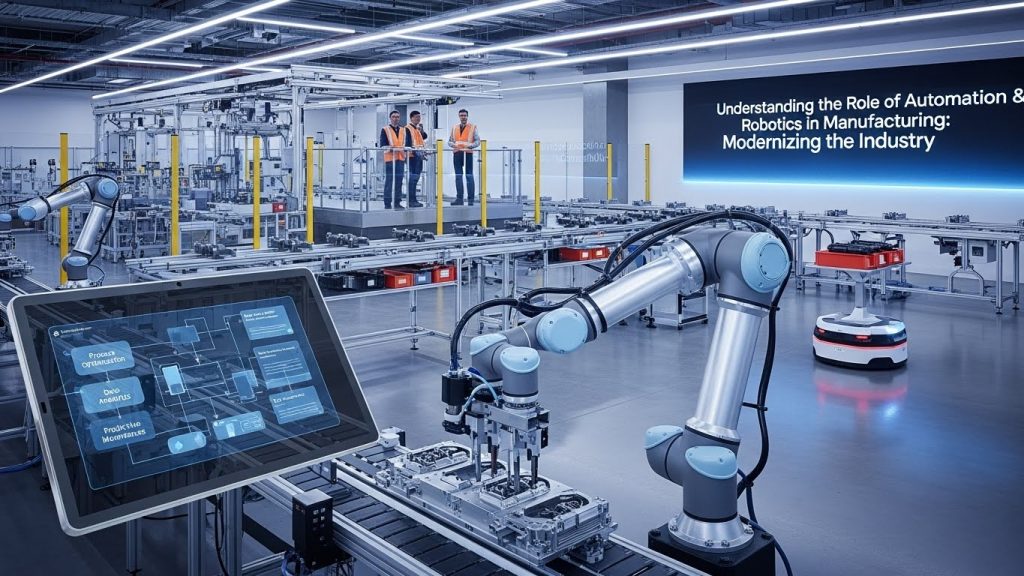
Understanding the Role of Automation & Robotics in Manufacturing: Modernizing the Industry
The manufacturing industry has been at the forefront of economic development for centuries, driving innovation and growth across the globe. In recent years, the integration of automation and robotics has revolutionized this sector, transforming production processes and increasing efficiency. As we delve into the modern era of manufacturing, it is crucial to understand how these technologies are reshaping the industry and what it means for the future.
The Evolution of Automation and Robotics in Manufacturing
Automation and robotics have a rich history in manufacturing, with their origins dating back to the First Industrial Revolution. The mechanization of production through steam power and machinery set the stage for future advancements. By the late 20th century, factories began adopting basic robotic systems to handle repetitive tasks, marking the beginning of a new era. Today, the integration of sophisticated robots and automated systems is ubiquitous, greatly enhancing productivity and quality.
Modern manufacturing robots are equipped with advanced sensors and artificial intelligence, allowing them to perform complex tasks with precision. They can be found in various sectors, including automotive, electronics, and pharmaceuticals, where they play a crucial role in assembly, packaging, and quality control.
Benefits of Automation and Robotics in Manufacturing
The adoption of automation and robotics in manufacturing offers numerous benefits. Firstly, it significantly boosts productivity. Automated systems can operate 24/7 without the need for breaks, leading to higher production rates and reduced downtime. This continuous operation is particularly advantageous in industries with high demand and tight deadlines.

Additionally, automation enhances product quality. Robots are capable of performing tasks with a high degree of accuracy and consistency, minimizing human error and ensuring that products meet stringent quality standards. This precision is essential in industries like aerospace and healthcare, where even minor defects can have significant consequences.
Another key benefit is cost reduction. While the initial investment in automation technology can be substantial, the long-term savings are considerable. Reduced labor costs, lower error rates, and increased efficiency contribute to a rapid return on investment.
Challenges and Considerations
Despite the clear advantages, the integration of automation and robotics in manufacturing is not without challenges. One major concern is the potential impact on the workforce. As machines take over repetitive and labor-intensive tasks, there is a fear of job displacement. However, it is important to recognize that automation also creates new job opportunities in areas such as robot maintenance, programming, and system optimization.
Furthermore, the implementation of automation technology requires significant financial investment and technical expertise. Companies must evaluate the cost-benefit ratio and ensure they have the necessary infrastructure and skills to support these advanced systems. Training and upskilling employees to work alongside robots is essential for a smooth transition.
Cybersecurity is another critical consideration. As manufacturing systems become more interconnected through the Industrial Internet of Things (IIoT), the risk of cyber threats increases. Manufacturers must implement robust security measures to protect their operations and data from potential breaches.
Case Studies: Automation in Action
Many companies have successfully integrated automation and robotics into their manufacturing processes, leading to remarkable improvements. For instance, the automotive industry has long been a pioneer in robotic assembly lines. Robots are used extensively for tasks such as welding, painting, and assembly, resulting in faster production times and higher-quality vehicles.
In the electronics sector, automation is used to produce complex components with precision. Companies like Foxconn, a major supplier for Apple, employ a large number of robots to assemble electronic devices, ensuring consistency and reducing the risk of defects.
The pharmaceutical industry also benefits from automation, particularly in the production and packaging of medications. Automated systems ensure that products are manufactured in sterile environments and meet stringent regulatory standards, enhancing patient safety.
The Future of Automation and Robotics in Manufacturing
The future of manufacturing is inextricably linked to the advancement of automation and robotics. Emerging technologies, such as artificial intelligence, machine learning, and collaborative robots (cobots), are poised to further revolutionize the industry. Cobots, in particular, are designed to work alongside humans, enhancing productivity and safety on the factory floor.
Moreover, the concept of the smart factory is gaining traction. These factories leverage data and connectivity to optimize operations, reduce waste, and improve decision-making. As more manufacturers adopt smart technologies, the industry will continue to evolve towards greater efficiency and sustainability.
Takeaways
Automation and robotics are playing a pivotal role in modernizing the manufacturing industry. Their integration has led to significant improvements in productivity, quality, and cost-efficiency. While challenges such as workforce displacement and cybersecurity concerns must be addressed, the benefits far outweigh the drawbacks.
As technology continues to advance, the potential for further transformation is immense. By embracing automation and robotics, manufacturers can remain competitive in a rapidly changing global market, driving innovation and growth for years to come.
Addressing Workforce Challenges
While the potential for automation and robotics in manufacturing is vast, addressing the workforce challenges they present is paramount. It’s a common misconception that robots will replace human workers entirely. In reality, automation can augment human capabilities, allowing workers to focus on more strategic, value-added tasks.
To ease this transition, companies must invest in training and development programs. Skill enhancement initiatives that focus on robotics operation, maintenance, and programming can empower the existing workforce to adapt to new technologies. Furthermore, collaboration between industry leaders, educational institutions, and government bodies can ensure a steady pipeline of skilled labor ready to meet the demands of a modern manufacturing environment.
The Role of Governments and Policy Makers
Government support is critical in fostering an environment conducive to the integration of automation and robotics in manufacturing. Policymakers can play a vital role by providing incentives for companies to invest in new technologies. Tax breaks, grants, and subsidies can ease the financial burden associated with the initial setup and implementation of automation systems.
Moreover, regulations that ensure the ethical and safe deployment of robotics are essential. Policies must address data privacy, worker safety, and environmental impact, ensuring that automation contributes positively to society. Collaborative efforts between the private sector and governments can establish standards and best practices that guide the responsible use of automation technologies.
Environmental Impact and Sustainability
Another important aspect of automation and robotics in manufacturing is their environmental impact. Automated systems can contribute to sustainability by optimizing resource use and minimizing waste. For instance, precision in production processes reduces the consumption of raw materials, leading to less waste and lower energy costs.
Furthermore, the ability to monitor and control production processes in real-time allows manufacturers to make data-driven decisions that improve efficiency and reduce emissions. As companies prioritize sustainability, the integration of eco-friendly robots and energy-efficient automation systems will become increasingly important.
In addition, the transition to automated processes can support the development of circular economies, where products are designed for reuse and recycling, further mitigating environmental impact. By embracing automation, manufacturers can achieve their sustainability goals while maintaining competitive advantage.
Global Trends in Automation and Robotics
The trend towards automation and robotics in manufacturing is a global phenomenon, with different regions adopting technologies at varying paces. Countries like Japan and Germany are leaders in robot density, with a high number of robots per 10,000 workers. These nations have long recognized the benefits of automation and have invested heavily in research and development.
In contrast, developing countries are gradually catching up, spurred by a desire to enhance productivity and compete on a global stage. The rise of affordable automation solutions and international collaborations is making it easier for these nations to integrate robotics into their manufacturing processes.
Moreover, the COVID-19 pandemic has accelerated the adoption of automation across the globe. The need for social distancing and remote operations has highlighted the importance of resilient, automated systems that can maintain production continuity even in challenging circumstances.
Preparing for the Future
As we look to the future, it’s clear that the role of automation and robotics in manufacturing will only continue to grow. Companies that embrace these technologies now will be well-positioned to thrive in an increasingly digital world. To prepare, manufacturers should focus on several key areas:
- Continuous Learning: Encourage a culture of learning within the organization, where employees are motivated to acquire new skills and adapt to technological advancements.
- Strategic Partnerships: Collaborate with technology providers, research institutions, and industry peers to stay at the forefront of innovation.
- Investment in Technology: Allocate resources wisely to ensure the seamless integration of automation systems that align with business goals.
- Agility and Flexibility: Foster an organizational structure that can quickly pivot and respond to market changes and technological advancements.
By focusing on these areas, manufacturers can harness the full potential of automation and robotics, ensuring long-term success and sustainability in a rapidly evolving industry.
About the Author