
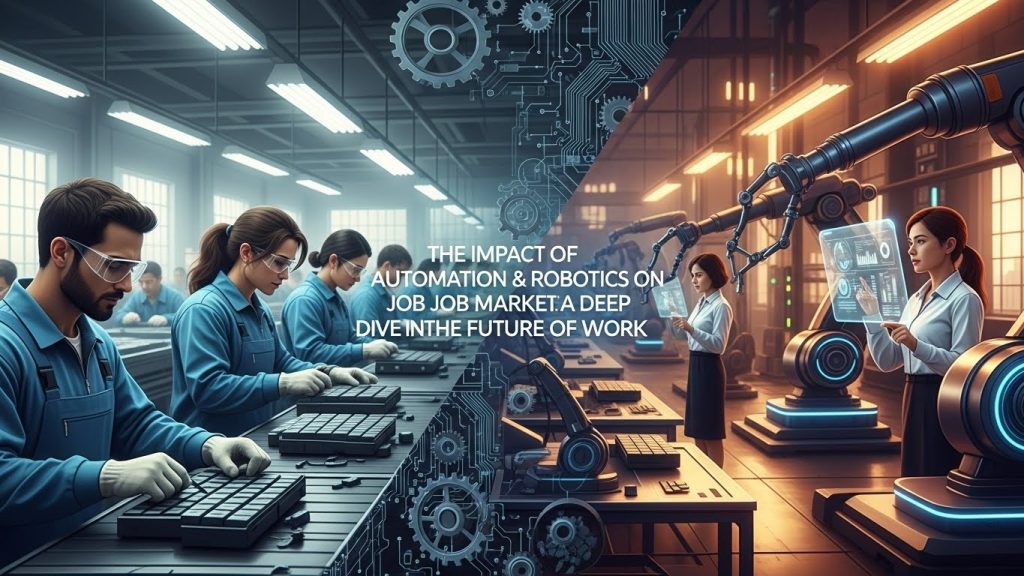
The Impact of Automation & Robotics on Job Market: A Deep Dive into the Future of Work
In recent years, the advent of automation and robotics has transformed numerous industries, reshaping the landscape of the global job market. As technology continues to advance at an unprecedented pace, it is crucial to understand the implications of automation on employment and the future of work. This comprehensive analysis delves into the multifaceted effects of automation and robotics, exploring the challenges and opportunities they present to workers, industries, and economies worldwide.
The Rise of Automation and Robotics
Automation refers to the use of technology to perform tasks without human intervention, while robotics involves the design and use of robots for accomplishing various functions. Both fields have seen significant growth, driven by advancements in artificial intelligence, machine learning, and data analytics. As businesses strive for increased efficiency and reduced costs, automation and robotics have become integral to operations across sectors ranging from manufacturing to healthcare.
For instance, the manufacturing industry has long been a pioneer in adopting automation, with robots handling repetitive tasks such as assembly, welding, and painting. This trend is now extending to other sectors, including agriculture, logistics, and retail, where automated systems are employed for tasks like crop harvesting, inventory management, and customer service.
Impact on Employment: Job Displacement vs. Job Creation

The impact of automation and robotics on employment is a topic of ongoing debate. On one hand, there are concerns about job displacement as machines take over tasks traditionally performed by humans. This phenomenon, often referred to as “technological unemployment,” can lead to significant workforce disruptions, particularly in industries heavily reliant on manual labor.
However, automation is also driving job creation in new areas. As machines take on routine tasks, there is a growing demand for skilled workers who can design, program, and maintain these systems. Moreover, automation can lead to the emergence of entirely new industries and job roles, as businesses innovate and develop new products and services.
Skills and Education: Preparing for the Future
As automation and robotics continue to evolve, the skills required in the workforce are changing dramatically. There is a growing emphasis on reskilling and upskilling to ensure workers can adapt to new technologies. Technical skills such as coding, data analysis, and robotics engineering are becoming increasingly valuable, but soft skills like creativity, problem-solving, and emotional intelligence are also essential as they are less susceptible to automation.
Educational institutions and governments play a crucial role in preparing the workforce for these changes. By investing in education and training programs focused on emerging technologies, they can help mitigate the risks of job displacement and ensure a smooth transition to the future of work.
Economic Implications: Productivity and Growth
Automation and robotics offer significant economic benefits by enhancing productivity and driving economic growth. Automated systems can perform tasks faster and more accurately than humans, leading to increased output and efficiency. This, in turn, can result in cost savings for businesses and lower prices for consumers.
Moreover, automation can contribute to economic growth by enabling companies to scale operations and enter new markets. For instance, automated production lines allow manufacturers to increase output without a corresponding rise in labor costs, making it easier to compete globally. In the long run, these productivity gains can boost economic prosperity and improve living standards.
Social Implications: Inequality and Workforce Polarization
While automation and robotics can drive economic growth, they also pose social challenges, particularly concerning inequality and workforce polarization. As machines take over routine tasks, low-skilled workers may find it difficult to compete in the job market, leading to increased income inequality.
At the same time, automation can result in workforce polarization, with job opportunities increasingly concentrated at the high-skill and low-skill ends of the spectrum. Middle-skill jobs, which often involve routine tasks, are most at risk of being automated, potentially leading to a hollowing out of the middle class.
Addressing these challenges requires proactive measures, such as implementing policies that promote inclusive growth and ensuring access to education and training for all segments of society.
The Role of Policy and Regulation
Governments and policymakers have a vital role to play in shaping the impact of automation and robotics on the job market. By implementing policies that encourage innovation while protecting workers’ rights, they can help maximize the benefits of technological advancements while minimizing potential downsides.
Key policy areas include labor laws that protect workers from exploitation, social safety nets that support those affected by job displacement, and incentives for businesses to invest in worker training and development. Additionally, international cooperation is essential to address the global nature of technological change and ensure a coordinated response to its challenges.
Conclusion: Embracing the Future of Work
The impact of automation and robotics on the job market is multifaceted, presenting both challenges and opportunities. While there are concerns about job displacement and inequality, automation also offers the potential for increased productivity, economic growth, and job creation in new sectors. The future of work depends on how well we can adapt to these changes, leveraging technology to improve living standards and create a more inclusive and equitable society.
By investing in education, fostering innovation, and implementing forward-thinking policies, we can ensure that automation and robotics serve as tools for progress, benefiting workers, businesses, and economies alike. Embracing the future of work requires a collaborative effort from all stakeholders, working together to navigate the complexities of technological change and build a brighter future for all.
Case Studies: Real-World Examples of Automation in Action
Looking at real-world examples can provide valuable insights into how automation and robotics are reshaping industries. One notable example is the automotive industry, where companies like Tesla have adopted advanced robotics in their manufacturing processes. The use of robots for tasks such as welding and assembly has not only enhanced production efficiency but also improved the quality and consistency of the vehicles produced.
In the healthcare sector, automation is transforming patient care and administrative operations. Robotic surgical systems, for instance, allow surgeons to perform minimally invasive procedures with greater precision, reducing recovery times and improving patient outcomes. On the administrative side, automated systems are used to manage patient records, schedule appointments, and process insurance claims, increasing efficiency and reducing the burden on healthcare professionals.
Challenges in Implementing Automation and Robotics
Despite the clear benefits, implementing automation and robotics is not without challenges. One major hurdle is the initial cost of investment, which can be substantial, particularly for small and medium-sized enterprises. The transition to automated systems also requires a significant change in organizational culture and processes, which can be daunting for businesses accustomed to traditional methods.
Furthermore, there is the challenge of ensuring cybersecurity in automated systems. As more devices become connected through the Internet of Things (IoT), the risk of cyberattacks increases, necessitating robust security measures to protect sensitive data and ensure operational continuity.
The Ethical Dimension: Balancing Innovation and Responsibility
The rise of automation and robotics also raises important ethical considerations. As machines take on more roles traditionally performed by humans, questions about responsibility and accountability become increasingly pertinent. For instance, in the event of a malfunction or accident involving a robot, it is crucial to determine who is responsible—the manufacturer, the user, or the system itself.
Moreover, there are concerns about privacy and surveillance as automated systems collect and analyze vast amounts of data. Balancing the benefits of data-driven insights with the need to protect individual privacy is a complex challenge that requires careful consideration and regulation.
Looking Ahead: Future Trends in Automation and Robotics
As we look to the future, several trends are likely to shape the evolution of automation and robotics. The integration of artificial intelligence with robotics is expected to create more intelligent and adaptable systems capable of learning and improving over time. This could lead to the development of robots that can perform complex tasks in unpredictable environments, such as disaster response or space exploration.
Another emerging trend is the democratization of automation technology. Advances in software and hardware are making it more accessible and affordable, allowing even small businesses to leverage automation to enhance their operations. This democratization could lead to widespread adoption across industries, further accelerating the pace of change.
Conclusion: Navigating the Transformation
The transformation brought about by automation and robotics is inevitable, but its impact on the job market and society at large will depend on how we navigate this change. By fostering a culture of lifelong learning and adaptation, we can equip workers with the skills they need to thrive in a technologically advanced world.
Collaboration between governments, businesses, and educational institutions is essential to ensure that the transition is smooth and beneficial for all. Through thoughtful planning and proactive measures, we can harness the power of automation and robotics to create a future that is not only more efficient and productive but also more equitable and sustainable. As we continue to explore the potential of these technologies, let us remain committed to the principles of innovation, responsibility, and inclusivity, building a future where technology serves the common good.
About the Author