
Introduction to the Evolution of Automation & Robotics
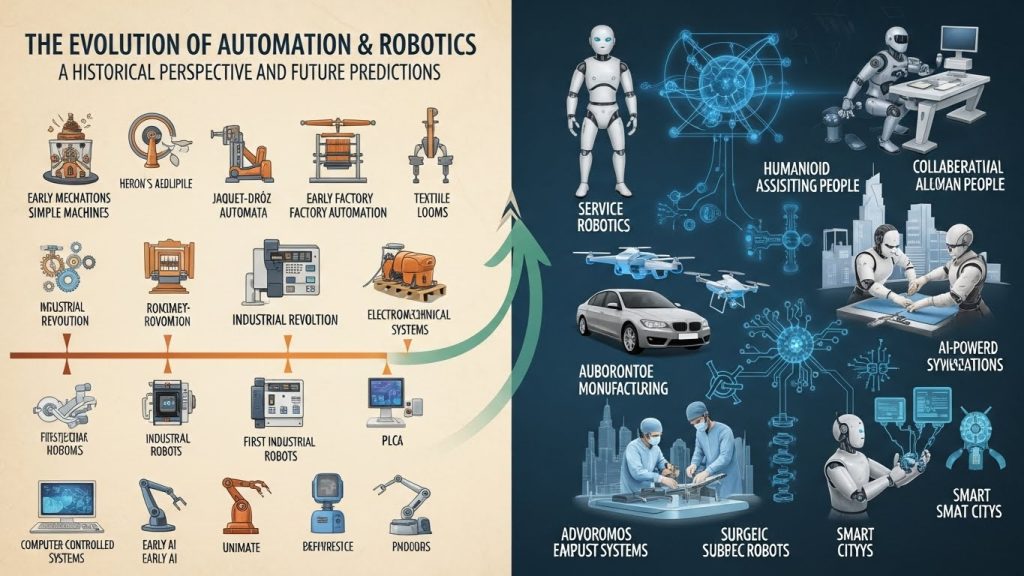
The field of automation and robotics has seen a remarkable evolution over the centuries, transforming industries and daily life. From the rudimentary machines of the past to today’s sophisticated robots capable of performing complex tasks, the journey of automation is as fascinating as it is groundbreaking. This post delves into the historical evolution of automation and robotics, examines the technological advancements that have propelled the field forward, and offers insights into future predictions.
The Early Days of Automation and Robotics
Automation and robotics are not modern inventions. Their roots can be traced back to ancient civilizations. For instance, the ancient Greeks and Chinese developed early mechanisms that hinted at the future potential of automation. These included water clocks, automata, and other devices powered by water, steam, or mechanical means.
During the Industrial Revolution in the 18th century, automation began to take a more definitive shape. The invention of the steam engine by James Watt and the power loom by Edmund Cartwright revolutionized industries by introducing mechanized processes that significantly reduced the need for manual labor. These innovations laid the groundwork for the development of more complex machines.
The 20th Century: A Leap in Robotics
The 20th century marked a significant turning point in the evolution of robotics. The concept of a programmable robot was first proposed by science fiction writer Karel Čapek in his 1920 play “R.U.R.” (Rossum’s Universal Robots), introducing the term “robot” to the world.

In the 1950s, the field of robotics began to gain momentum with the invention of the first industrial robot by George Devol. Known as the Unimate, this robotic arm was capable of performing repetitive tasks with precision and reliability, revolutionizing the manufacturing sector. By the 1960s, companies like General Motors began integrating robots into their assembly lines to improve efficiency and safety.
As the century progressed, advancements in robotics technology continued to accelerate. The development of microprocessors in the 1970s and 1980s further enhanced the capabilities of robots, allowing for more complex programming and greater autonomy.
The Rise of AI and Machine Learning in Robotics
The late 20th and early 21st centuries have witnessed the integration of artificial intelligence (AI) and machine learning into robotics, fundamentally altering the landscape of automation. AI has enabled robots to process vast amounts of data and make decisions in real-time, enhancing their ability to perform tasks that require judgment and adaptability.
For instance, AI-powered robots are now capable of navigating complex environments autonomously, as seen in the development of self-driving cars by companies like Tesla and Waymo. Additionally, machine learning algorithms have been employed to improve the precision of robots in fields such as healthcare, where robotic surgeons can perform delicate procedures with unparalleled accuracy.
Current Trends in Automation and Robotics
Today, automation and robotics are integral to numerous sectors, including manufacturing, healthcare, logistics, and even agriculture. The use of collaborative robots, or cobots, is a growing trend, allowing humans and robots to work side-by-side safely and efficiently. These robots are designed to be easily programmable and flexible, making them ideal for small and medium-sized enterprises.
Moreover, the advent of the Internet of Things (IoT) has further propelled the capabilities of robots, enabling them to communicate and interact with other devices seamlessly. This connectivity allows for enhanced data collection and analysis, improving the efficiency and effectiveness of automated systems.
The World Economic Forum has highlighted how automation is reshaping the workforce, emphasizing the need for reskilling and upskilling to adapt to this changing landscape.
Future Predictions for Automation and Robotics
Looking ahead, the future of automation and robotics promises to be even more transformative. Experts predict that advancements in AI, machine learning, and robotics will lead to the development of even more sophisticated autonomous systems. These systems will be capable of performing tasks that are currently beyond the reach of human capabilities.
One area of significant potential is in the realm of humanoid robots. These robots, designed to resemble humans in appearance and behavior, are expected to play crucial roles in sectors such as healthcare, where they can assist with elder care and rehabilitation. Companies like Boston Dynamics are already making strides in developing robots with human-like agility and dexterity.
Additionally, the push towards sustainable and environment-friendly automation solutions is likely to gain momentum. Robots powered by renewable energy sources and those designed to aid in environmental conservation efforts will become increasingly prevalent.
Ethical and Societal Implications
As with any technological advancement, the evolution of automation and robotics raises important ethical and societal questions. The potential displacement of jobs due to increased automation is a significant concern, necessitating proactive measures to ensure a smooth transition for the workforce.
Moreover, the development of autonomous systems requires careful consideration of ethical guidelines to ensure the responsible use of technology. Issues such as privacy, security, and accountability must be addressed to foster public trust and acceptance of these innovations.
Organizations such as the Robotics Industries Association are actively engaged in promoting best practices and standards to guide the ethical development and deployment of robotics technologies.
Conclusion: Embracing the Future of Automation and Robotics
The evolution of automation and robotics is a testament to human ingenuity and the relentless pursuit of progress. From the simple machines of the past to the complex autonomous systems of today, this journey has reshaped industries and redefined what is possible. As we look to the future, embracing the potential of these technologies while addressing the challenges they present will be crucial in ensuring a prosperous and equitable society.
As we continue to explore the possibilities of automation and robotics, the opportunities for innovation and growth are boundless. By fostering a culture of collaboration and ethical responsibility, we can harness the power of these technologies to create a future that benefits all of humanity.
Preparing for a Robotic Future
To fully harness the potential of automation and robotics, it is crucial to prepare for the inevitable shifts they will bring about. This preparation involves not only technological advancements but also educational and policy reforms. Here are some key areas to focus on as we move toward a robotic future:
Education and Skill Development
As automation and robotics technologies continue to evolve, the demand for skilled professionals in these fields will increase. Educational institutions must adapt by offering curricula that emphasize STEM (Science, Technology, Engineering, and Mathematics) education and specialized training in robotics and AI. Furthermore, promoting lifelong learning and continuous skill development will be essential to equip the workforce with the capabilities needed to thrive in an automated world.
Initiatives such as coding bootcamps, online courses, and vocational training programs can play a significant role in bridging the skills gap and preparing individuals for new opportunities in the robotics industry.
Policy and Regulatory Frameworks
Governments and policymakers must establish robust frameworks to guide the integration of automation and robotics into society. This includes developing regulations that address safety, privacy, and ethical considerations associated with autonomous systems. Ensuring that these frameworks are flexible and adaptable will be crucial in keeping pace with rapid technological advancements.
Furthermore, policies aimed at supporting workers displaced by automation should be prioritized. This may include offering financial assistance, retraining programs, and incentives for businesses to create new job opportunities in emerging sectors.
Fostering Innovation and Collaboration
Innovation thrives in environments where collaboration is encouraged. By fostering partnerships between academia, industry, and government, we can accelerate the development of cutting-edge robotics technologies. Collaborative research initiatives and public-private partnerships can facilitate the sharing of knowledge and resources, driving progress in the field.
For example, innovation hubs and research centers dedicated to robotics and AI can serve as incubators for new ideas and technologies, bringing together experts from various disciplines to tackle complex challenges.
Conclusion: Navigating the Path Forward
The future of automation and robotics is a complex landscape, rich with opportunities and challenges. As we navigate this path, it is imperative to adopt a balanced approach that leverages the potential of these technologies while addressing their societal implications. By prioritizing education, policy, and collaboration, we can ensure that the transition to a robotic future is smooth, equitable, and beneficial for all.
Ultimately, the successful integration of automation and robotics will depend on our ability to adapt and innovate. By embracing change and fostering a culture of continuous learning and ethical responsibility, we can unlock the full potential of these groundbreaking technologies and pave the way for a brighter, more connected future.
About the Author