
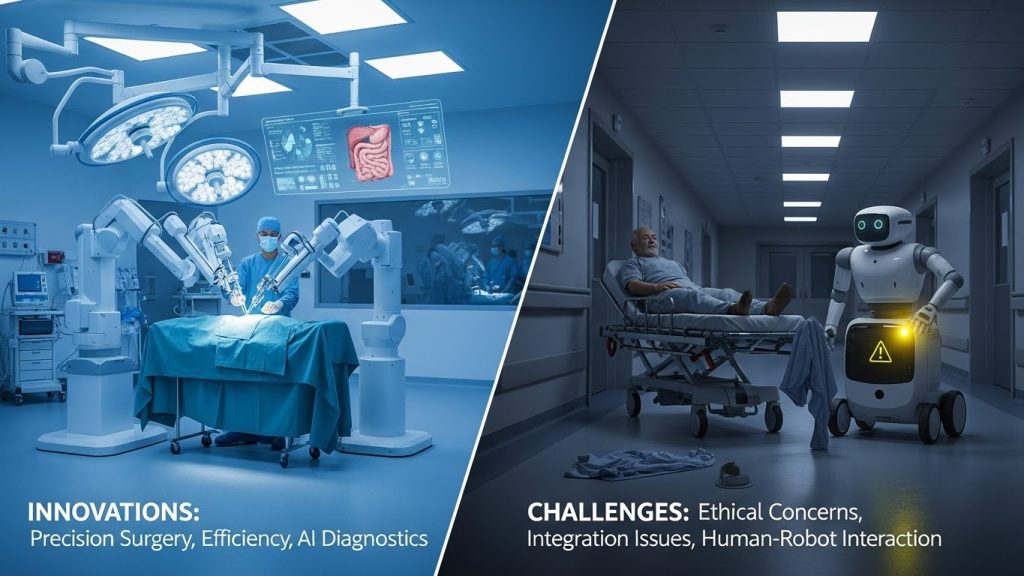
How Automation & Robotics Are Transforming Healthcare: Innovations and Challenges Ahead
In recent years, the healthcare industry has been witnessing a transformative wave driven by automation and robotics. This technological evolution is reshaping the way medical services are delivered, enhancing efficiency, accuracy, and patient care. From surgical robots to automated administrative tasks, the integration of advanced technology in healthcare is not just a trend but a revolution that promises to redefine the future of medicine.
The Rise of Automation in Healthcare
Automation in healthcare refers to the use of technology to perform tasks that were traditionally done by humans, thereby improving efficiency and reducing human error. One of the most significant impacts of automation is seen in administrative processes. Tasks such as scheduling, billing, and patient record management are increasingly being automated, allowing healthcare professionals to focus more on patient care. For instance, IBM Watson Health has been instrumental in harnessing artificial intelligence to streamline administrative processes and support healthcare professionals in making data-driven decisions.
Moreover, automation is playing a critical role in diagnostic processes. Automated systems can analyze medical images, lab results, and other diagnostic data with a level of precision that surpasses human capability. This not only speeds up the diagnosis process but also enhances the accuracy of results, thereby improving patient outcomes.
Robotics in Surgery and Patient Care

Robotic technology is revolutionizing surgical procedures and patient care. Surgical robots, such as the da Vinci Surgical System, enable minimally invasive surgeries with high precision. This technology allows surgeons to perform complex procedures through tiny incisions, resulting in reduced recovery time, minimized pain, and lower risk of infection for patients.
In addition to surgical applications, robots are increasingly being used in patient care settings. For example, robotic assistants in hospitals can help with tasks such as delivering medications, transporting samples, and even providing companionship to patients. These robots are designed to support healthcare staff, allowing them to devote more time to direct patient care.
Challenges in Implementing Automation and Robotics
Despite the promising advantages, the integration of automation and robotics in healthcare comes with its own set of challenges. One of the primary concerns is the high cost of technology implementation. Initial investments in robotic systems and automation tools can be substantial, posing a barrier for many healthcare facilities, especially those in low-resource settings.
Another significant challenge is the training and adaptation required for healthcare professionals to work alongside these advanced technologies. The shift from traditional methods to technology-driven processes necessitates comprehensive training programs to ensure that staff can effectively utilize these tools.
Furthermore, there are concerns regarding data security and patient privacy. As automation and robotics rely heavily on data, ensuring the protection of sensitive patient information is paramount. Healthcare organizations need to implement robust cybersecurity measures to safeguard against data breaches and unauthorized access.
Innovations Driving the Future of Healthcare
Despite the challenges, ongoing innovations in automation and robotics continue to drive the future of healthcare. The development of 3D printing technology is one such innovation, enabling the creation of patient-specific prosthetics and even the potential for printing living tissues and organs. This technology holds the promise of transforming personalized medicine and addressing the shortage of organ donors.
Another exciting innovation is the use of robotic exoskeletons in rehabilitation. These wearable devices assist patients with mobility impairments, helping them regain strength and improve their quality of life. Companies like ReWalk Robotics are at the forefront of developing exoskeleton technology for individuals with spinal cord injuries.
The Ethical Considerations of Automation and Robotics
As automation and robotics become more prevalent in healthcare, ethical considerations must be addressed. The question of responsibility in the event of an error or malfunction is a key concern. Determining liability in cases where robotic systems are involved is complex and requires clear guidelines and regulations.
Additionally, there are concerns about the potential loss of jobs due to automation. While technology can take over routine tasks, it is crucial to ensure that healthcare professionals are not rendered obsolete. Instead, there should be a focus on retraining and upskilling to enable staff to work effectively alongside technology.
Takeaways
The integration of automation and robotics in healthcare is undeniably transforming the industry, offering unprecedented opportunities to enhance patient care, streamline operations, and improve outcomes. However, this transformation is not without its challenges. Addressing issues related to cost, training, data security, and ethical considerations is crucial for the successful implementation of these technologies.
As innovations continue to emerge, the future of healthcare looks promising with the potential for more personalized, efficient, and effective medical care. By embracing automation and robotics, the healthcare industry can overcome current limitations and pave the way for a new era of medicine.
Ultimately, the successful integration of automation and robotics in healthcare will depend on a balanced approach that considers both the technological advancements and the human element, ensuring that the primary focus remains on improving patient outcomes and delivering high-quality care.
Adapting to Technological Advancements
The rapid pace of technological advancements in healthcare requires a dynamic approach to adaptation. Healthcare institutions must remain agile, continuously evaluating and integrating new technologies to stay ahead. This involves creating a culture of innovation where staff are encouraged to embrace change and experiment with new tools and methodologies.
One way to facilitate this is through partnerships and collaborations with technology companies and academic institutions. By working together, healthcare providers can gain access to cutting-edge research and development, ensuring that they are at the forefront of technological advancements. For example, partnerships with organizations like Mayo Clinic offer opportunities to explore new technologies and leverage research findings to enhance patient care.
The Role of Policy and Regulation
As automation and robotics become more integral to healthcare, the role of policy and regulation becomes increasingly important. Regulatory bodies need to establish clear guidelines for the use and development of these technologies to ensure safety and efficacy. This includes setting standards for the approval of new robotic systems and automated processes, as well as establishing protocols for monitoring and evaluating their performance.
Moreover, policies must address the ethical and legal implications of using automation and robotics in healthcare. This includes ensuring patient consent, protecting patient privacy, and establishing liability in the event of technological malfunctions. By creating a robust regulatory framework, policymakers can facilitate the safe and effective integration of these technologies into healthcare systems.
Patient-Centric Technology
At the heart of automation and robotics in healthcare is the goal of enhancing patient care. Patient-centric technology focuses on improving the patient experience, ensuring that care is personalized, accessible, and efficient. Innovations such as telemedicine and remote monitoring devices are examples of how technology is bringing healthcare to patients’ doorsteps, offering convenience and timely care.
These technologies empower patients to take an active role in their healthcare journey, providing them with tools and resources to monitor their health and communicate with their healthcare providers. This shift towards patient-centric care is transforming the traditional patient-provider relationship, fostering collaboration and shared decision-making.
Future Prospects of Automation and Robotics in Healthcare
Looking ahead, the future prospects of automation and robotics in healthcare are promising. As technology continues to evolve, we can anticipate further advancements in areas such as artificial intelligence, machine learning, and nanotechnology. These developments will likely lead to more sophisticated diagnostic tools, advanced surgical techniques, and personalized treatment options.
Furthermore, the integration of the Internet of Medical Things (IoMT) will enable interconnected devices to collect and analyze data in real-time, providing healthcare professionals with valuable insights to enhance patient care. As these technologies mature, they will pave the way for a more proactive approach to healthcare, focusing on prevention and early intervention.
Conclusion: Embracing the Future
Automation and robotics are undoubtedly transforming the healthcare landscape, offering immense potential to improve patient outcomes, streamline operations, and reduce costs. However, realizing this potential requires a concerted effort from all stakeholders, including healthcare providers, policymakers, technology developers, and patients themselves.
By embracing these technologies and addressing the associated challenges, the healthcare industry can usher in a new era of innovation and excellence. As we move forward, it is essential to maintain a patient-centric focus, ensuring that technology serves as a tool to enhance, rather than replace, the human touch in healthcare.
Ultimately, the successful integration of automation and robotics in healthcare will depend on our ability to balance technological advancements with ethical considerations, fostering a future where technology and humanity work hand in hand to deliver high-quality, compassionate care.
About the Author