The Evolution of Automation & Robotics: A Historical Perspective and Future Predictions In the modern era, automation and robotics have become pivotal in transforming industries and enhancin.
braziltechtoday.comBrazil tech news and digital trends.
“The Evolution of Automation & Robotics: A Historical Perspective and Future Predictions”
Updated: April 8, 2026
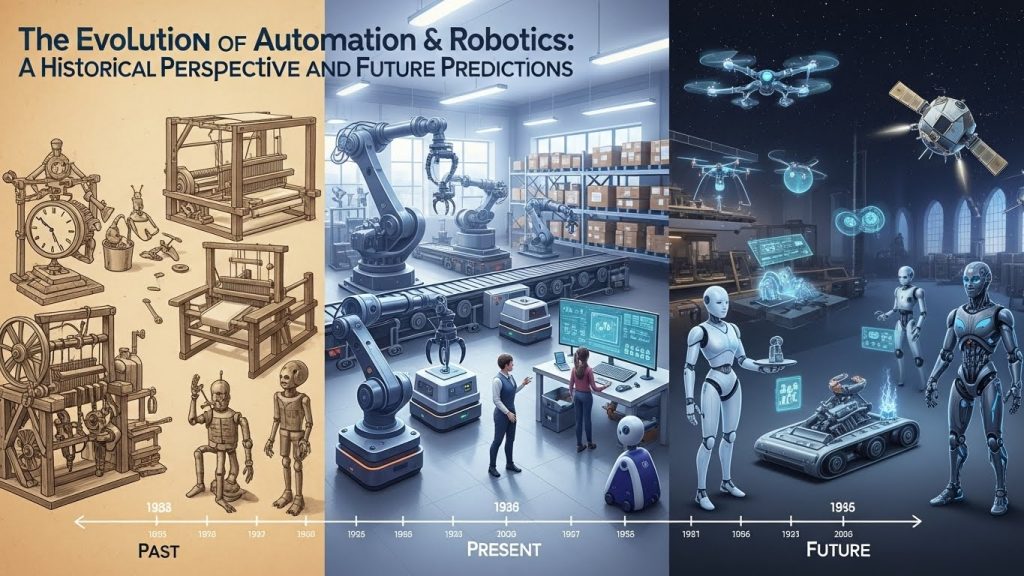
The Evolution of Automation & Robotics: A Historical Perspective and Future Predictions
In the modern era, automation and robotics have become pivotal in transforming industries and enhancing human capabilities. From the early days of mechanical contraptions to the sophisticated artificial intelligence-driven robots of today, the journey of automation and robotics is an intriguing saga of human ingenuity and technological advancement. In this article, we explore the historical milestones, current trends, and future predictions in the realm of automation and robotics.
A Brief Historical Overview
The concept of automation and robotics dates back to ancient civilizations. The Greeks, for instance, were known for their Antikythera mechanism, an early example of a mechanical analog computer used to predict astronomical positions. The timeline of automation saw significant developments during the Industrial Revolution when machines began to replace manual labor in various industries.
In the 20th century, the field of robotics began to take shape with the introduction of the first programmable robots. The invention of the Unimate robot in 1954 marked a turning point, as it was the first industrial robot used in manufacturing. This robot was primarily used in automotive assembly lines, laying the foundation for future developments in industrial automation.
The Rise of Industrial Automation
Industrial automation gained momentum in the latter half of the 20th century with advancements in computing and electronics. Programmable logic controllers (PLCs) and computer numerical control (CNC) machines became standard in manufacturing, allowing for increased precision and efficiency. The automotive industry, in particular, benefited significantly from automation technologies, leading to faster production times and improved quality control.

In the 21st century, the integration of Internet of Things (IoT) technology further revolutionized industrial automation. IoT devices enabled machines to communicate with each other and with centralized control systems, facilitating real-time monitoring and predictive maintenance. This shift towards interconnected systems marked the advent of Industry 4.0, a new era in manufacturing characterized by smart factories and cyber-physical systems.
Robotics in the Service Sector
While industrial automation focused on manufacturing, the service sector witnessed a growing adoption of robotics for various applications. Service robots, such as those used in healthcare, hospitality, and retail, have become increasingly prevalent. In healthcare, robots assist in surgeries, rehabilitation, and patient care, enhancing the precision and effectiveness of medical procedures.
The hospitality industry has also embraced automation, with robots performing tasks such as room service delivery and concierge services. Retailers utilize robots for inventory management and customer assistance, streamlining operations and enhancing the shopping experience. The integration of artificial intelligence in these robots allows for advanced capabilities like language processing and personalized interactions.
Technological Advancements Driving Automation
The rapid evolution of automation and robotics can be attributed to several technological breakthroughs. Artificial intelligence (AI) and machine learning (ML) have empowered robots with the ability to learn, adapt, and make decisions. These technologies enable robots to perform complex tasks with minimal human intervention, leading to enhanced productivity and efficiency.
Another significant advancement is the development of collaborative robots, or cobots, designed to work alongside humans. Cobots are equipped with sensors and safety features that allow them to operate in close proximity to human workers, augmenting their capabilities without compromising safety. The adoption of cobots has been particularly beneficial in small and medium-sized enterprises (SMEs), where flexibility and cost-effectiveness are crucial.
Future Predictions in Automation and Robotics
Looking ahead, the future of automation and robotics is poised for remarkable growth and transformation. One of the key trends is the increasing use of autonomous vehicles and drones. These technologies have the potential to revolutionize industries such as logistics, agriculture, and transportation by optimizing delivery routes, reducing human error, and improving operational efficiency.
Additionally, the integration of AI with robotics is expected to lead to the development of more intelligent and autonomous systems. These systems will be capable of performing complex decision-making tasks, opening up new possibilities in areas such as space exploration, disaster response, and environmental monitoring.
Another exciting prospect is the advancement of humanoid robots, which are designed to mimic human behavior and interaction. These robots could play a crucial role in addressing labor shortages, particularly in countries with aging populations. By taking on tasks that require human-like dexterity and communication, humanoid robots could become valuable assets in healthcare, education, and customer service.
Challenges and Considerations
Despite the promising future, the evolution of automation and robotics presents several challenges that need to be addressed. One of the primary concerns is the potential impact on employment. As automation technologies continue to replace manual and repetitive tasks, there is a growing need for reskilling and upskilling the workforce to ensure that workers can transition to new roles.
Ethical considerations also come into play, particularly in the context of AI-driven robots. Issues such as privacy, data security, and decision-making accountability need to be carefully examined to ensure that these technologies are used responsibly and ethically.
Moreover, the development and deployment of advanced robotics require significant investment and infrastructure. Governments and organizations must collaborate to create conducive environments for innovation and provide support to businesses adopting these technologies.
Takeaways
The evolution of automation and robotics is a testament to human ingenuity and the relentless pursuit of progress. From humble beginnings to the sophisticated technologies of today, automation and robotics have reshaped industries and enhanced human capabilities. As we look to the future, the potential for innovation and transformation is immense, offering exciting opportunities and challenges alike. By embracing these advancements and addressing the associated challenges, we can pave the way for a future where automation and robotics play a pivotal role in improving the quality of life and driving economic growth.
The Role of Government and Policy
The advancement of automation and robotics is not only a technological journey but also a socio-economic one. Governments play a crucial role in shaping the future of these technologies through policy-making and regulatory frameworks. Policies that encourage research and development, provide incentives for innovation, and facilitate public-private partnerships are essential in fostering growth in the automation sector.
Moreover, regulatory bodies must address the ethical and safety concerns associated with robotics and AI. Establishing standards for data privacy, security, and ethical AI deployment will ensure that these technologies are developed and used in a manner that benefits society as a whole. International collaboration is also vital, as the global nature of technology means that standards and policies should transcend national borders.
Education and Workforce Transformation
As automation and robotics continue to evolve, the workforce must adapt to meet new challenges and opportunities. Education systems need to be reformed to include curricula that focus on STEM (Science, Technology, Engineering, and Mathematics) education, critical thinking, and problem-solving skills. By preparing students with the necessary skills and knowledge, we can equip the next generation to thrive in an increasingly automated world.
Furthermore, continuous learning and professional development programs are critical for the current workforce. Initiatives that offer training in new technologies, such as AI, robotics, and data analytics, will help workers transition into emerging roles and industries. Public and private sectors must collaborate to create accessible pathways for reskilling and upskilling, ensuring that no one is left behind in the technological revolution.
Case Studies: Successful Automation Implementations
Several industries have successfully implemented automation and robotics, leading to significant improvements in efficiency and productivity. For instance, the automotive industry has been a pioneer in adopting robotics for assembly line production. Companies like Toyota and Tesla have utilized advanced robotics to streamline their manufacturing processes, resulting in faster production cycles and reduced costs.
In agriculture, automation has led to the development of smart farming technologies. Autonomous tractors, drones, and sensors are used to monitor crop health, optimize irrigation, and manage resources efficiently. These innovations have increased crop yields and reduced environmental impact, showcasing the potential of automation in sustainable agriculture.
Another notable example is the logistics industry, where automation has transformed supply chain operations. Automated warehouses equipped with robotic systems, like those used by Amazon and DHL, have revolutionized order fulfillment and inventory management. These systems have reduced human error, improved accuracy, and increased the speed of operations, setting new standards for efficiency in the industry.
The Social Impact of Automation and Robotics
While automation and robotics offer numerous benefits, their social impact cannot be overlooked. The displacement of certain job roles due to automation poses significant challenges for affected workers and communities. It is essential to develop strategies that mitigate the negative effects of automation on employment and ensure that economic benefits are distributed equitably.
Automation can also contribute to addressing global challenges, such as healthcare accessibility and environmental sustainability. Robotic systems are being developed to provide healthcare services in remote areas, improving access to medical care for underserved populations. Additionally, automation technologies can aid in environmental conservation efforts, such as monitoring wildlife and reducing carbon emissions through efficient energy management systems.
Emerging Trends and Innovations
As we look to the horizon, several emerging trends and innovations are set to shape the future of automation and robotics. One such trend is the development of soft robotics, which focuses on creating robots with flexible and adaptable materials. These robots are designed to perform delicate tasks, such as handling fragile objects and interacting safely with humans, opening up new applications in healthcare and service industries.
Another exciting development is the rise of swarm robotics, where multiple robots work collectively to achieve a common goal. Inspired by natural systems like ant colonies and bird flocks, swarm robotics has the potential to revolutionize fields such as search and rescue operations, environmental monitoring, and even space exploration.
Moreover, the integration of blockchain technology with robotics is gaining traction. By providing secure and transparent data management, blockchain can enhance the reliability and traceability of automated systems, particularly in supply chain and manufacturing processes.
Conclusion: Embracing the Future
The evolution of automation and robotics is a testament to the relentless pursuit of innovation and progress. As we continue to witness groundbreaking advancements and explore new frontiers, it is essential to embrace these technologies in a manner that benefits society as a whole. By fostering collaboration, addressing ethical considerations, and investing in education and workforce development, we can harness the full potential of automation and robotics to create a better future for all.
The journey of automation and robotics is far from over, and the possibilities are limitless. As we move forward, let us remain committed to leveraging these technologies to drive positive change and unlock new opportunities for generations to come.